A field report on synchronizing state across multiple clients in real time with WebSocket and Socket.IO. How I built multi-user rooms and an instant match system with Redis and a NestJS gateway.
The challenge: synchronizing multiple clients in real time
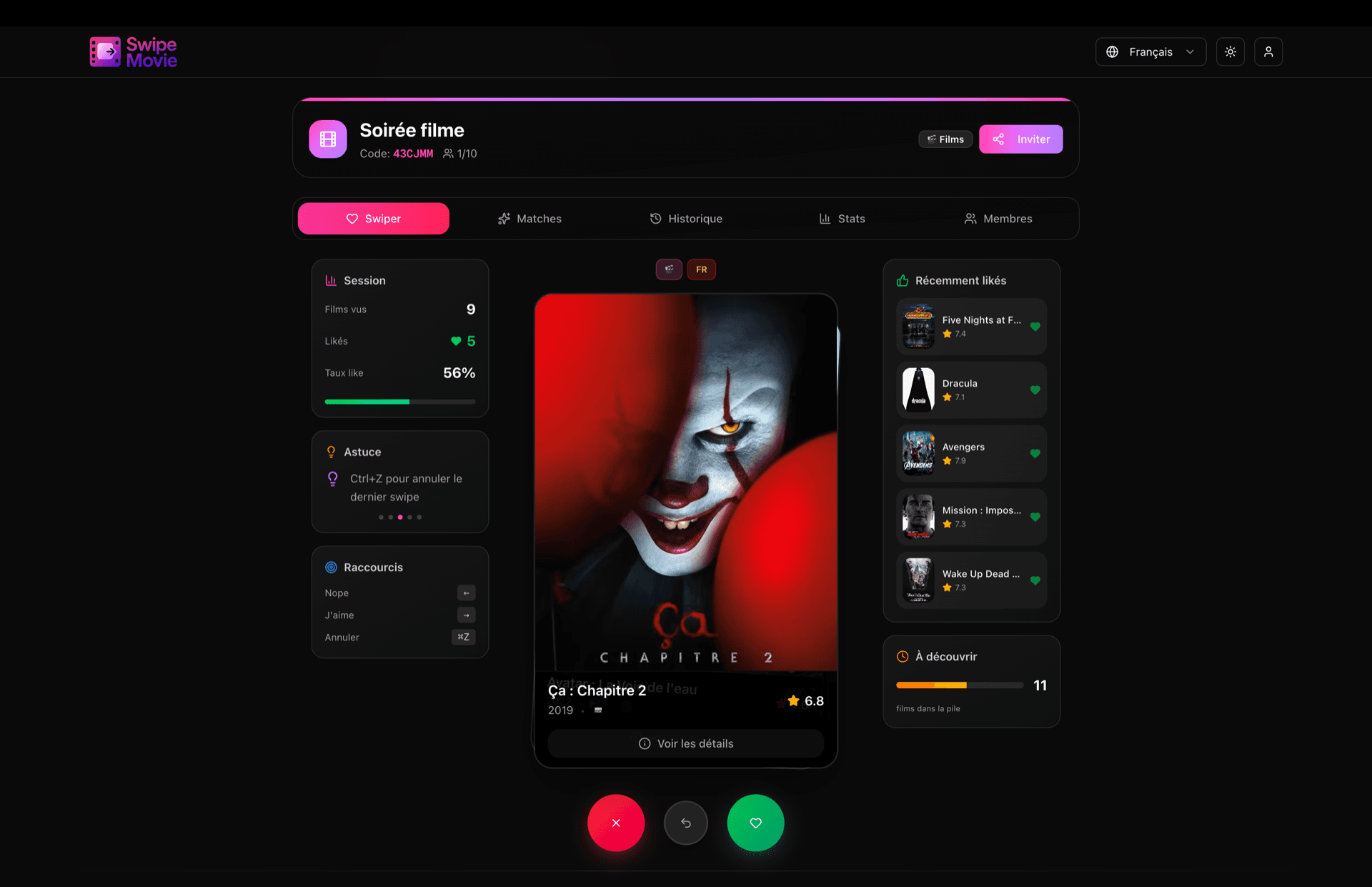
Picking a movie as a group is often a nightmare. That's exactly the problem Swipe Movie solves: a collaborative web app where a group swipes on movies, and the moment everyone likes the same one, a match appears instantly on every screen.Behind this simple mechanic hides a real architecture problem: how do you keep several clients synchronized in real time without any of them falling a step behind? Here are the choices that kept the app running in production, built around two pieces: WebSocket (via Socket.IO) and Redis.
Why WebSocket rather than polling
The first temptation is always HTTP polling: hitting the server every X seconds to find out whether something has changed. In practice, it's a poor fit for real-time use: noticeable latency, needless server load, and an experience that feels laggy.WebSocket opens a persistent bidirectional channel between the client and the server. The server can therefore push an event at the exact moment it happens: a match, a new participant, a swipe. With Socket.IO, you also get automatic reconnection, transport fallback, and above all the rooms abstraction, which fits my need perfectly.
Rooms: isolating each session
Each group session is a room identified by a short share code. That's the code you send to your friends so they can join, without needing an account, which removes all friction at the entry point.On the Socket.IO side, a room is a logical channel: any event emitted to a room only reaches the sockets that joined it. That's the guarantee of isolation between groups: two parallel sessions never see each other.The NestJS gateway orchestrates all of this via @SubscribeMessage decorators. Here is the core of the logic: joining a room and broadcasting a match.
@WebSocketGateway({ cors: true })
export class RoomGateway {
  @WebSocketServer() server: Server;

  constructor(private readonly roomService: RoomService) {}

  @SubscribeMessage('join-room')
  async handleJoin(
    @MessageBody() { code }: JoinRoomDto,
    @ConnectedSocket() client: Socket,
  ) {
    await client.join(code);
    // Room state persisted in Redis
    const state = await this.roomService.addParticipant(code, client.id);
    // Synchronize everyone in the room
    this.server.to(code).emit('room-updated', state);
  }

  @SubscribeMessage('swipe')
  async handleSwipe(
    @MessageBody() { code, movieId, liked }: SwipeDto,
    @ConnectedSocket() client: Socket,
  ) {
    const match = await this.roomService.registerSwipe(code, movieId, liked);
    if (match) {
      // A match! Broadcast in real time to the whole room
      this.server.to(code).emit('match', { movieId });
    }
  }
}
Redis: the shared memory of rooms
A crucial point: a room's state must not live in a Node process's memory. If I restart the server, or if I scale horizontally across several instances, that state is either lost or inconsistent across nodes.This is where Redis comes in, playing two complementary roles.
1. Caching and room state
For each room, I store the current state in Redis: connected participants, movies already seen, and each person's likes. It's shared memory, fast and accessible by any backend instance. When a participant joins or swipes, we read and update this state atomically.Detecting a match then becomes trivial: for a given movie, you simply check that every participant in the room liked it. Since the information lives in Redis, this computation stays consistent even under load.
2. State synchronization across instances
With several Node instances behind a load balancer, two clients in the same room can be connected to different servers. Without coordination, an emit on instance A would never reach the client connected to instance B.Socket.IO's Redis adapter solves this: it uses Redis pub/sub to propagate events across all instances. As a result, this.server.to(code).emit('match', ...) does reach all participants, regardless of which server hosts them. That's what makes multi-user state synchronization reliable at scale.
The complete stack
The whole thing rests on a modern, coherent stack:
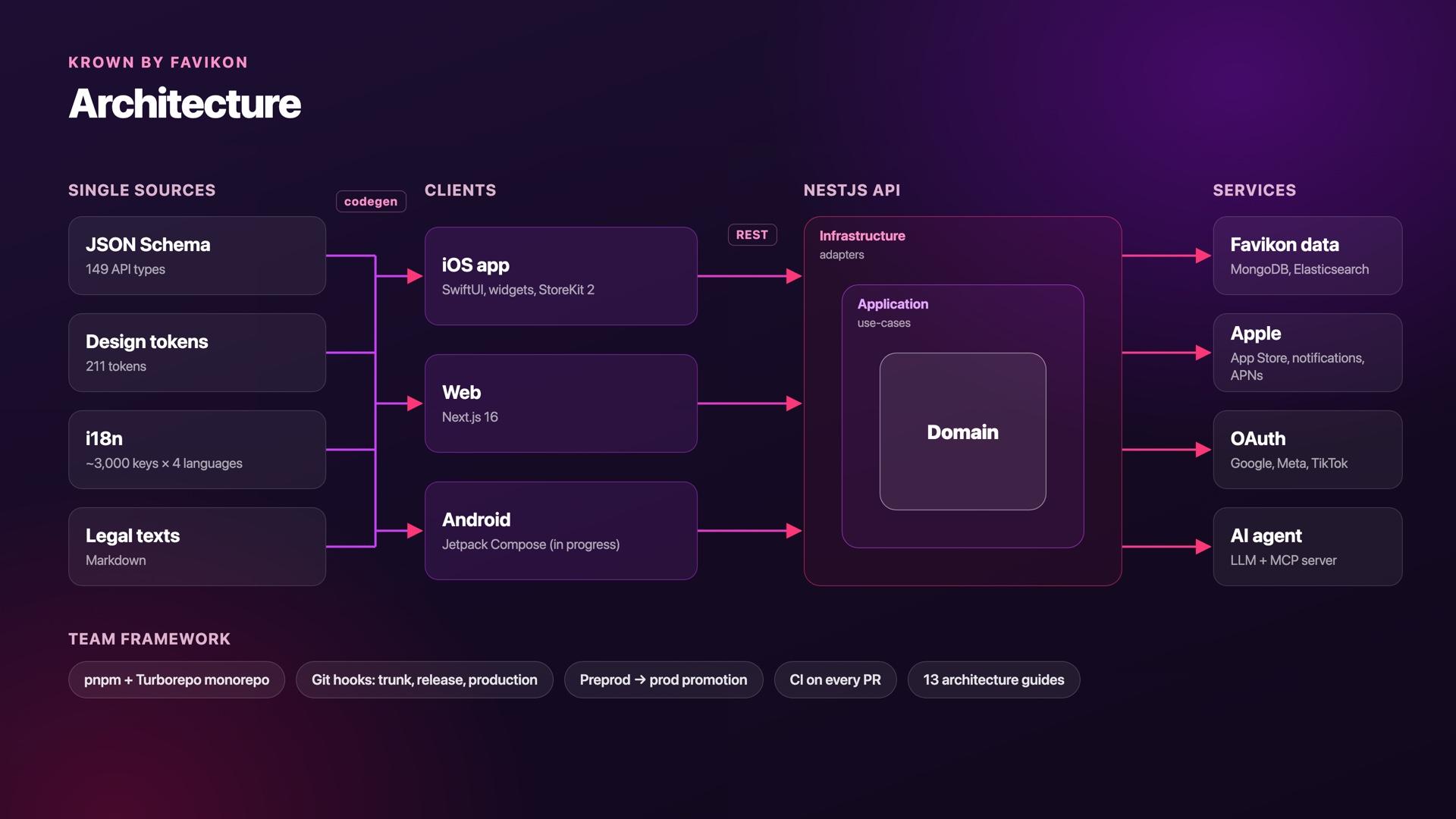
NestJS 11 for the WebSocket gateway and the API
Socket.IO for the real-time transport and rooms
Redis for caching, room state, and cross-instance pub/sub
PostgreSQL + Prisma for persistent data
Next.js 16 on the client side, consuming events live
Key takeaways
WebSocket beats polling the moment you talk about true real-time: no compromise on latency.
Never keep state in process memory: Redis as a shared source of truth is what makes scaling possible.
Socket.IO's Redis adapter is non-negotiable the moment you go beyond a single instance.
Rooms are a powerful abstraction: isolation, event targeting, and account-free share codes, all for free.
Want to see this real-time matching system in action? The full project is detailed on the Swipe Movie page. Feel free to reach out to discuss it.